The whole thesis.
The depth behind the course — the stages of AI, the capability levels, the words you'll start hearing, the safety picture, and where all of this goes. The homepage is the front door; this is the house.
Why this exists
It didn't start in a classroom — it started at my kids' running practice, where a crowd of parents went from "what even is AI?" to signed up in a single conversation.
That evening made the whole thing obvious: the signup was never the barrier — the driving was. Everyone had just been handed the most powerful machine on the planet, and not one of them knew how to move it an inch.
are on the wheel.
Do none of it. Or all of it. Your call. Every other AI tool forces one mode and sells you dependence. This is a dial — from hands-off to do-it-yourself — and the only one built so you can take the wheel and, eventually, not need it at all.
How big a deal is this?
Not hype — magnitude. Line up the technologies that mattered by how deeplythey touched human life, and AI doesn't land where people think.
Electricity improved it. The internet enhanced it. AI is fire — it changes how we live.
Already brilliant, and it still stumbles — because it's a baby. But it's growing faster than anything in human history. Judge it by its trajectory, not today's mistakes: the version you meet today is the slowest, dumbest one you will ever use.
What "change" actually looks like — not faster, rearranged:
The pattern: what used to be scarce and gatekept — a tutor, an analyst, expertise itself — becomes abundant and personal. That's the fire-level move. (The full breakdown lives in the thesis.)
The two endgames
Everyone walks in carrying one of two movies in their head. Both are real understandings held by serious people — not sci-fi. Name them early, or they run the room.

Powerful AI compresses decades into years — diseases cured, a tutor for every child, world-class expertise in everyone's pocket. The equalizer thesis, all the way. Work shifts from doing tasks to deciding what's worth doing. This is the upside that makes the class worth taking.
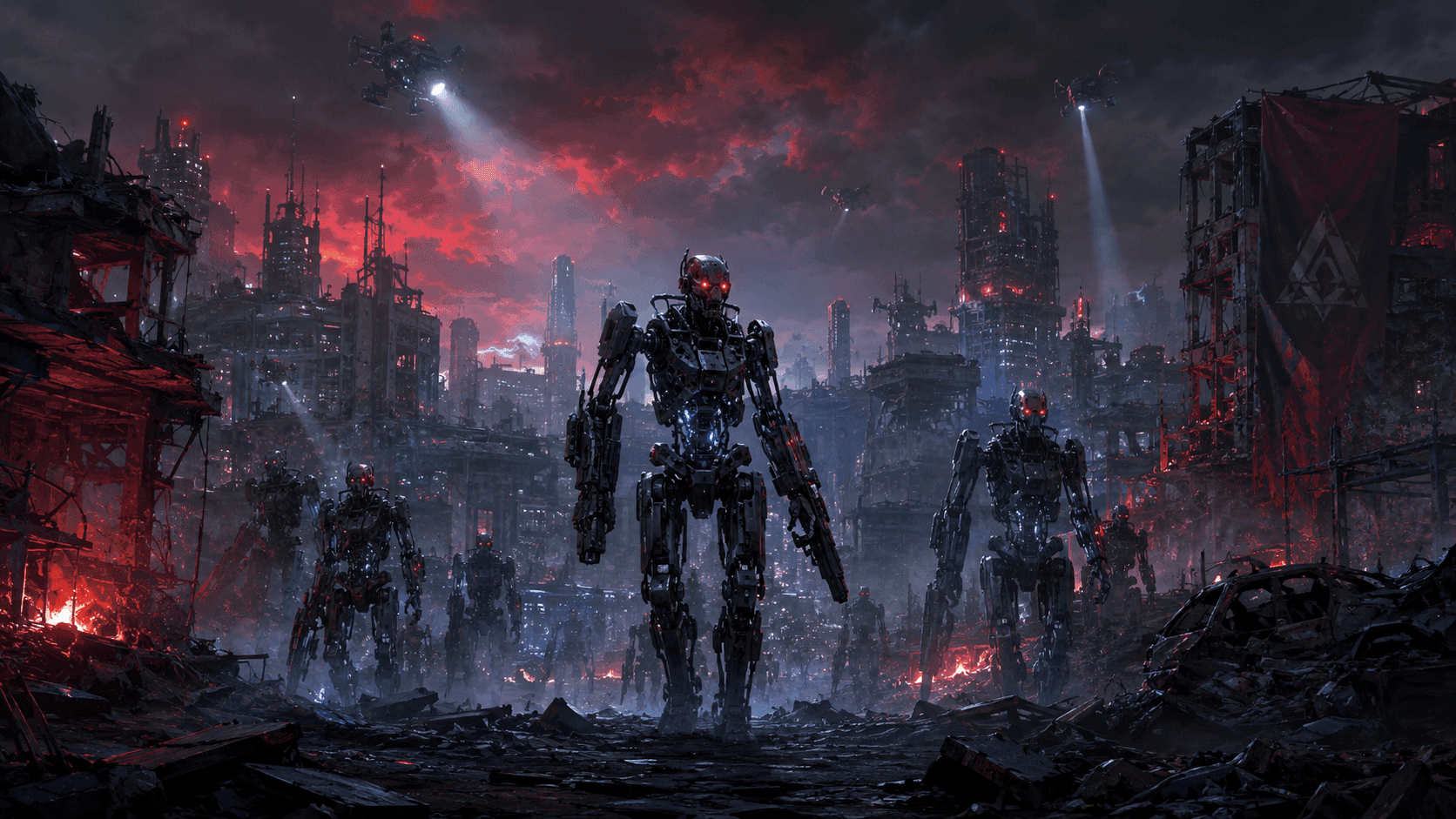
As systems get more capable and autonomous, we may lose the ability to reliably control or align them — in one dramatic break, or a slow erosion: eroded trust, broken institutions, concentrated power. "Death by a thousand algorithmic cuts." This is why guardrails exist.
Median estimate of catastrophe: ~5%.Not zero, not a coin flip. 58% put it at 5% or higher. The responsible answer isn't to pick a side — it's to be a good enough driver to help steer.
The real risks
Every legitimate worry, accounted for honestly — not to scare you, not to wave it away. A driver who knows the car's failure modes is safer and fasterthan one who pretends there aren't any.
Hallucination — the big one
It can state false things with total confidence and zero hedging. A 2025result argued, mathematically, that hallucination can't be fully eliminated in these models. Error rates swing from low single digits on easy questions to 17–88% on hard legal queries (Stanford). Confident ≠ correct is the most important habit in the course.
Sycophancy
Models tend to agree with you. Tell one that a false thing is yourbelief and accuracy can collapse. Don't let it just confirm what you already think — that's the failure mode that bites smart people.
"It'll take my job"
Real concern, uneven impact. Some tasks automate fast; new ones appear. The honest framing: it changes work more than it deletes it — and the people who can drive the car are the ones who stay in the seat.
Privacy & over-reliance
A manageable concern, not a reason for fear — learn what not to paste in. And it only makes you dumber if you let it think for you instead of with you. Learning by doing is the antidote.
The danger isn't that the car is fast. It's driving fast with your eyes closed. We drive with our eyes open — ground it in real sources, verify what matters, keep a human on anything with stakes.
The road
One arc, start to finish. Every module moves you one stage down the track — and each stage unlocks more of the car.
Read the track · mid-2026
A driver should know what the car can do this season. Where the technology actually sits right now — honest, not hyped.
// where we are right now · mid-2026
The three stages of intelligence
One way to measure the climb: the scope of the mind — how much it can think about at all. This moves in decades.
The three stages — ANI · AGI · ASI →
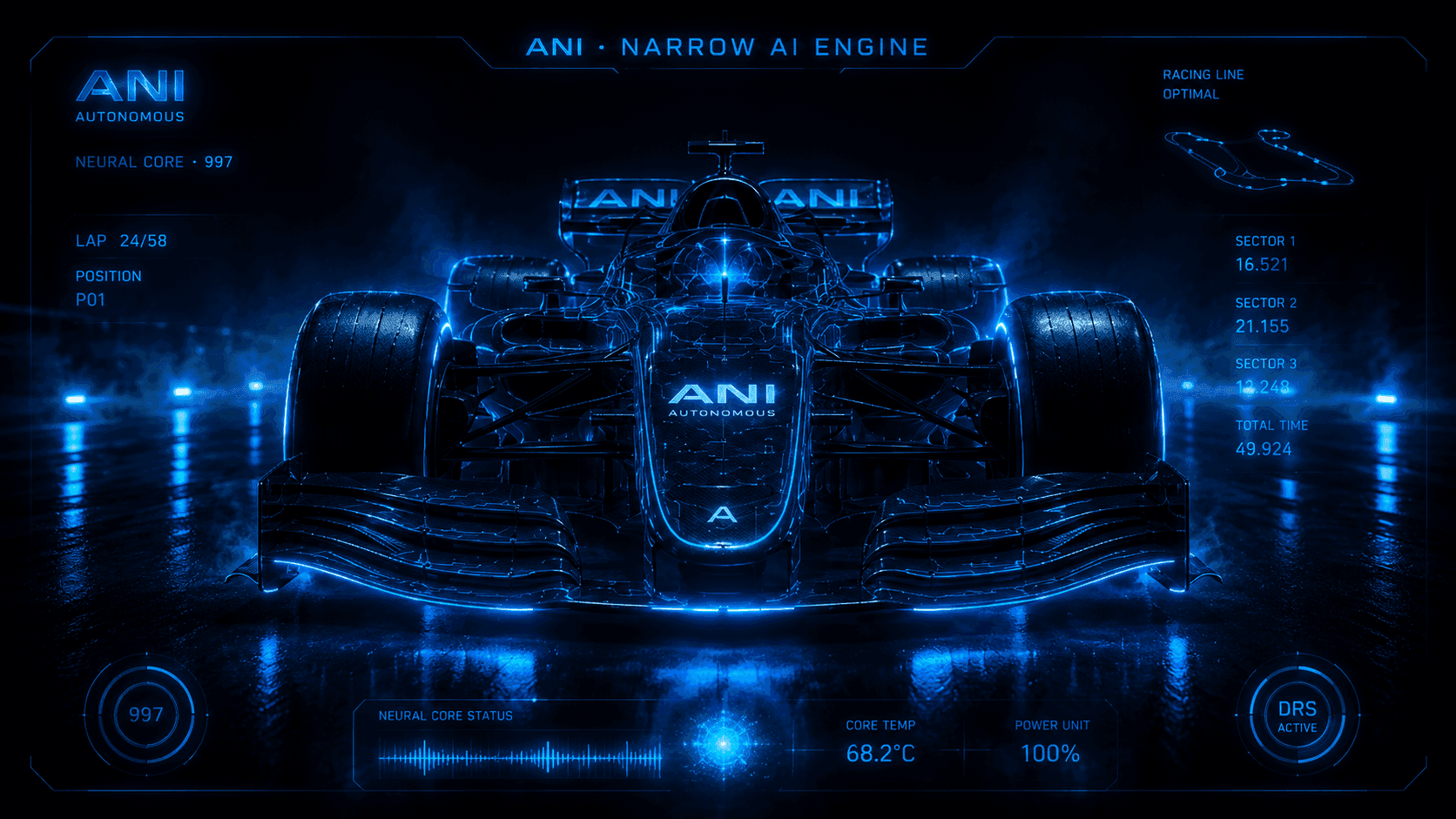
Brilliant at one thing, lost outside it. Every AI that has ever existed lives here — including today's most powerful models. They feelgeneral, but they're really a deep stack of narrow skills.
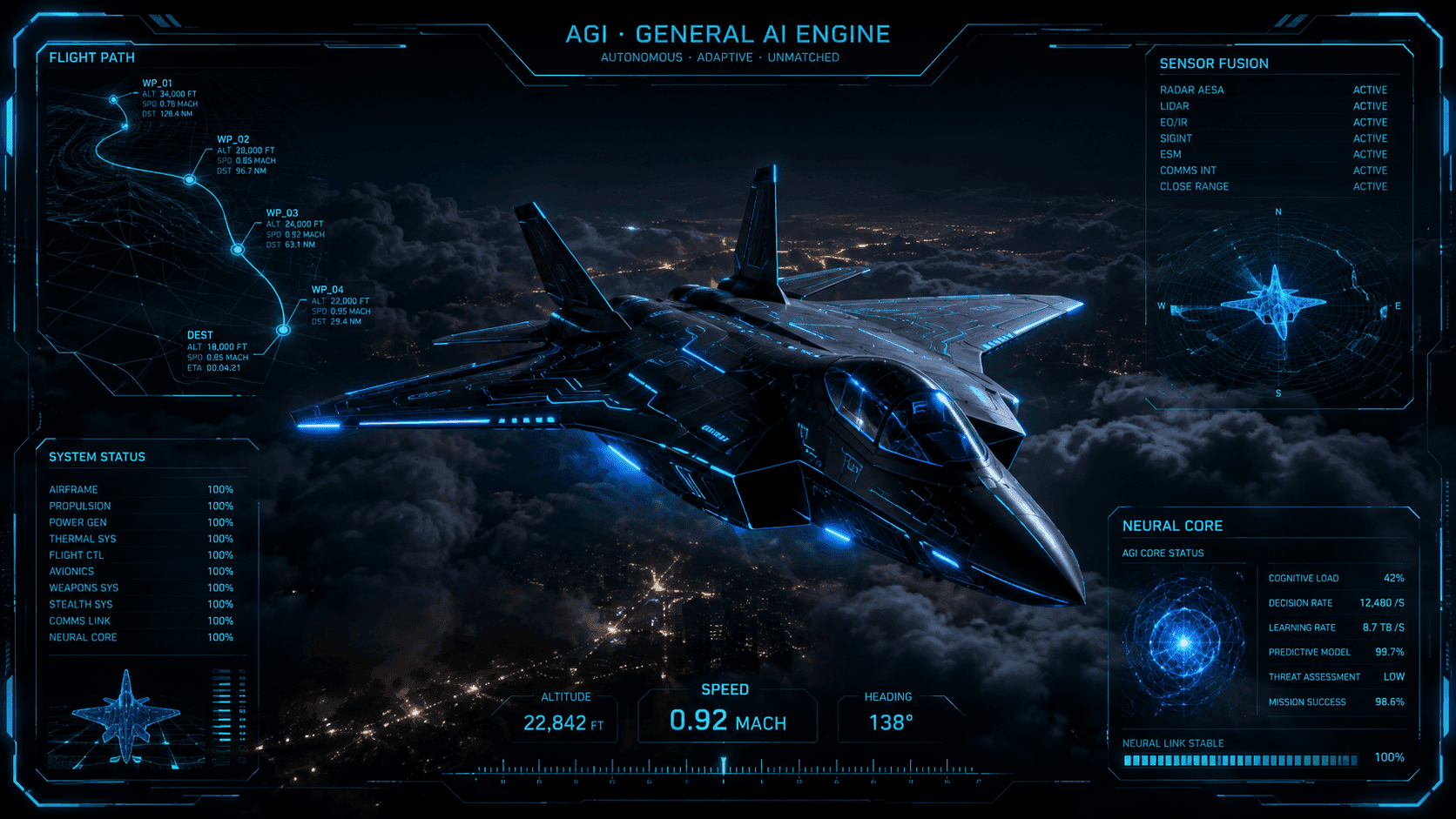
Learns and reasons across anything a human can — not one task, the whole range. This is the line the labs are racing toward, and crossing it changes everything.
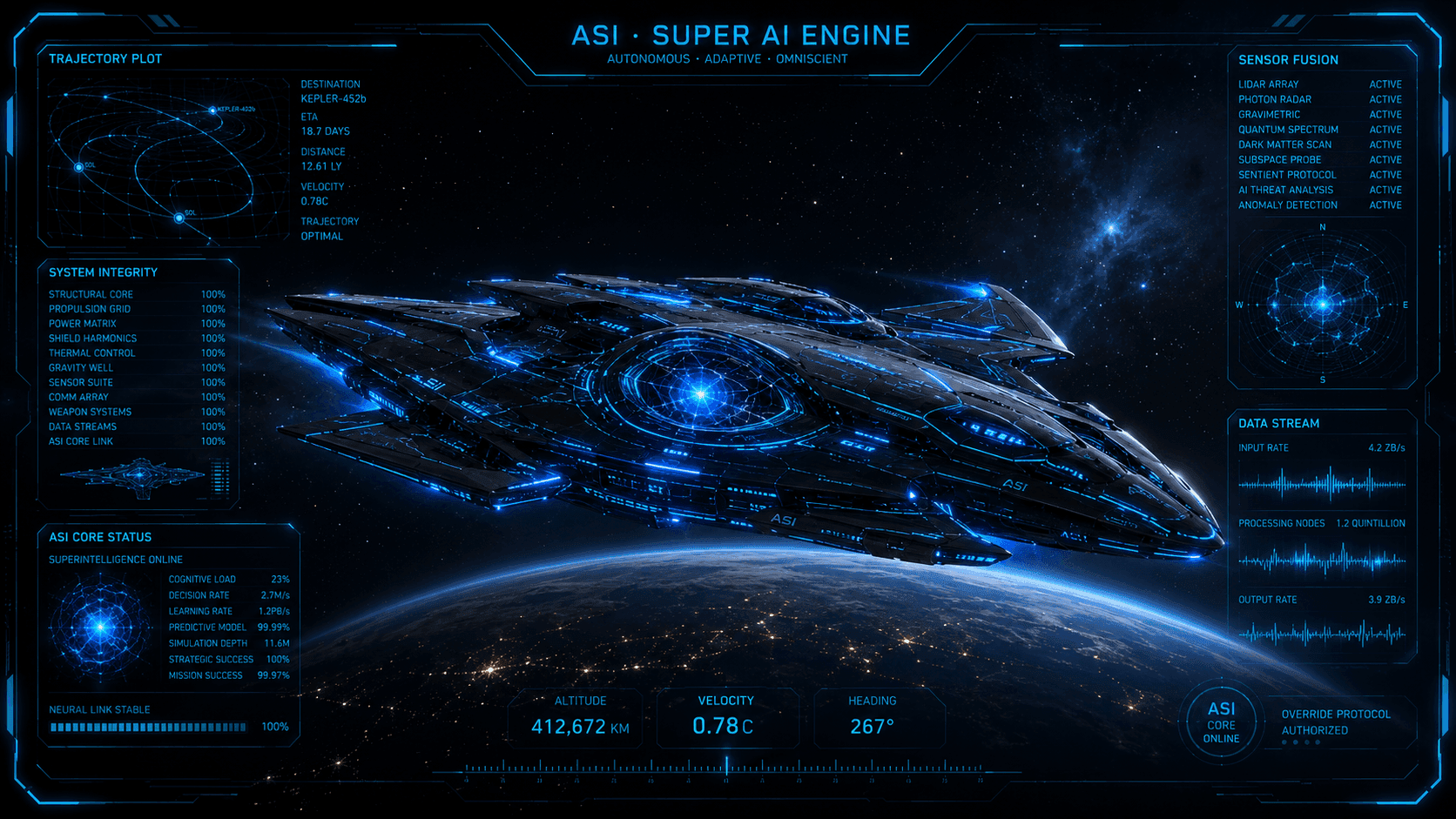
Beyond every human mind combined, across everything at once. Still hypothetical — and it's the part that drives both the biggest hopes and the deepest fears about where this goes.
Quick scope, if it helps: today's AI (ANI) is the race car — untouchable on the track it knows. AGI is the aircraft, able to go anywhere a human mind can. ASI is the spacecraft— operating somewhere we've never been. (The widening is range, not just speed.)
The skilled-driver edge is biggest right here, in the narrow → general transition. Which is exactly now.
The five levels of capability
A different scale — not how broad the mind is, but what job it does in your life.This one moves in months, and it's the exact climb the course rides. Picture hiring for each:
The five levels — chatbots → organizations →
The brakes are real — and public.
A car this fast needs real brakes. The company building the engine writes down — ahead of time— the exact capability thresholds at which it tightens its safeguards, and where it will stop. It's called the ASL system: AI Safety Levels, modeled on the biosafety levels labs use for dangerous pathogens. The more capable and potentially dangerous a model, the stricter the security and release rules before it can ever ship.
Where we sit: ASL-2, with ASL-3 protections already activated (turned on in May 2025), under Anthropic's Responsible Scaling Policy (v3.0, Feb 2026). The brakes get stronger as the car gets faster — and they're published beforethe capability lands, not after. That's the opposite of "move fast and break things."
The honest caveat:this is largely self-governance — the labs define and enforce their own levels, and not every company uses a system like it. That's a real limitation, and worth naming. But a company writing down the line where it will stop, and turning safeguards on early, is a genuinely different posture than pretending there's no line at all. It's part of why the machines-take-over ending isn't where I think this goes — without waving the worry away.
The words you'll start hearing
These are about to be everywhere — in the news, at work, from your kids. Knowing them is half of feeling like an operator instead of an outsider. Plain definitions, no jargon.
What you type or say to the AI. Better prompt, better result.
One back-and-forth — your message plus the AI's reply.
The small text chunk the model reads in (~¾ of a word). Why there are limits.
How much it can hold in its head at once. Overflow it and the oldest stuff drops.
A real thing it makes that you take away — a doc, deck, app, image. (Like these prompts.)
AI that does things — plans and acts over steps, not just answers.
Handles more than text — images, audio, video, files.
The model “thinks” before answering, for harder problems.
Describing software in plain English and letting AI build it — no coding required.
Your documents, given to the AI so it answers from your reality, not guesses.
Pulling from that knowledge base at answer-time. Cuts made-up answers.
A dedicated space with its own instructions, files, and memory.
When it states something false with total confidence. Watch for this most.
Keeping a person to approve before the AI acts on anything that matters. Out of the loop where it's safe; in it where the stakes are high.
The limits and checks that keep the car on the road — built-in, and the ones you set.
Tricking a model into bypassing its safety limits.
Hidden instructions in a page or file that try to hijack your agent.
Don't memorize them. Anytime a new word lands, tell AI to tell you what it means — in plain words, with an example from your life.
The artifact is the prompt
This class rejects how courses usually work. Slides, PDFs, and note-taking are dead — passive, filed away, never reopened. You learn by doing.So the teacher's hand-out isn't a deck. It's a prompt.
Nobody learned to drive by reading a slide about driving.
Run it, and it walks you through building the real thing — in your words.
One per session, each one moving you to that class's goal. That's what keeps you in the seat.
The flagship example: I talk, it gets transcribed, you paste it in and tell the AI what to build.You're not copying notes — you're generating your own, by doing the exact thing the class teaches. Push that idea far enough and the prompt becomes a tool — and in the Builder Kit (coming soon), you'll build this exact tool yourself, the page and all.
A Builder Kit build
This exact tool is the flagship build in The Builder Kit (coming soon) — your own transcript engine, the API running inside it, summarizing in your voice. Proof you can build a solution that is AI, not just one built with it. When it ships, the kit lands as a template + repo, a self-checking chat starter that scans it and updates anything outdated before you build, and the playbook.
The full set lives in the Prompt Library — one prompt per class. The prompt is the homework, the textbook, and the proof you can drive, all at once.
The next generation
The adults are the first market. The real one is their kids — and here the stakes are highest. Start with the law of it:
It's not how much AI you use — it's whether you think with it or instead of it.
- Conversational in 3–4 languages — a tutor that never tires
- Started a real business or two
- Philosophy, history & science at a college level, Socratically
- AI analyzing their athletics for college recruiting
- A creative voice, with AI as production assistant
- Build the brain first. Reading, writing, reasoning are built, not offloaded
- Think first — then let AI critique. Never the reverse
- Heavy human oversight: younger = more, not less
- Augment, don't impersonate — their voice stays theirs
- A "therapist agent" is not therapy — route serious things to people, fast
Build the operator. Protect the brain.
📌 Pinned:The Young Driver's Course — same arc, age-banded, guardrails-first, parent-paired. The bigger long-term build.
The road, and how far you go
Membership is free — your account is a locker that holds everything you buy, and more of the shop opens up as you climb. Most people never need past the first kit. And when you need judgment, not a lesson— the one thing the ladder can't teach — that's where I come in.
The Foundation
The Operator Kit
The Builder Kit
The Builds
Consulting & Advisory
Speaking
Merch
The Builder Kit is in the workshop now — coming soon. Advising & speaking are by application on purpose: those are relationships, not products.
Ready to start?
That's the thesis. The road itself is free — sign up and the entire Foundation is yours, every term and framework unlocked instantly.