
AI is a self-driving
F1 car. Nobody taught
you to drive.
Here's the part nobody mentions: it can teach you to drive it. This is the school and the toolkit for actually using AI — from your first prompt to building your own agents.
AI won't replace you… if you become the one who runs it.
or read the whole thinking ↓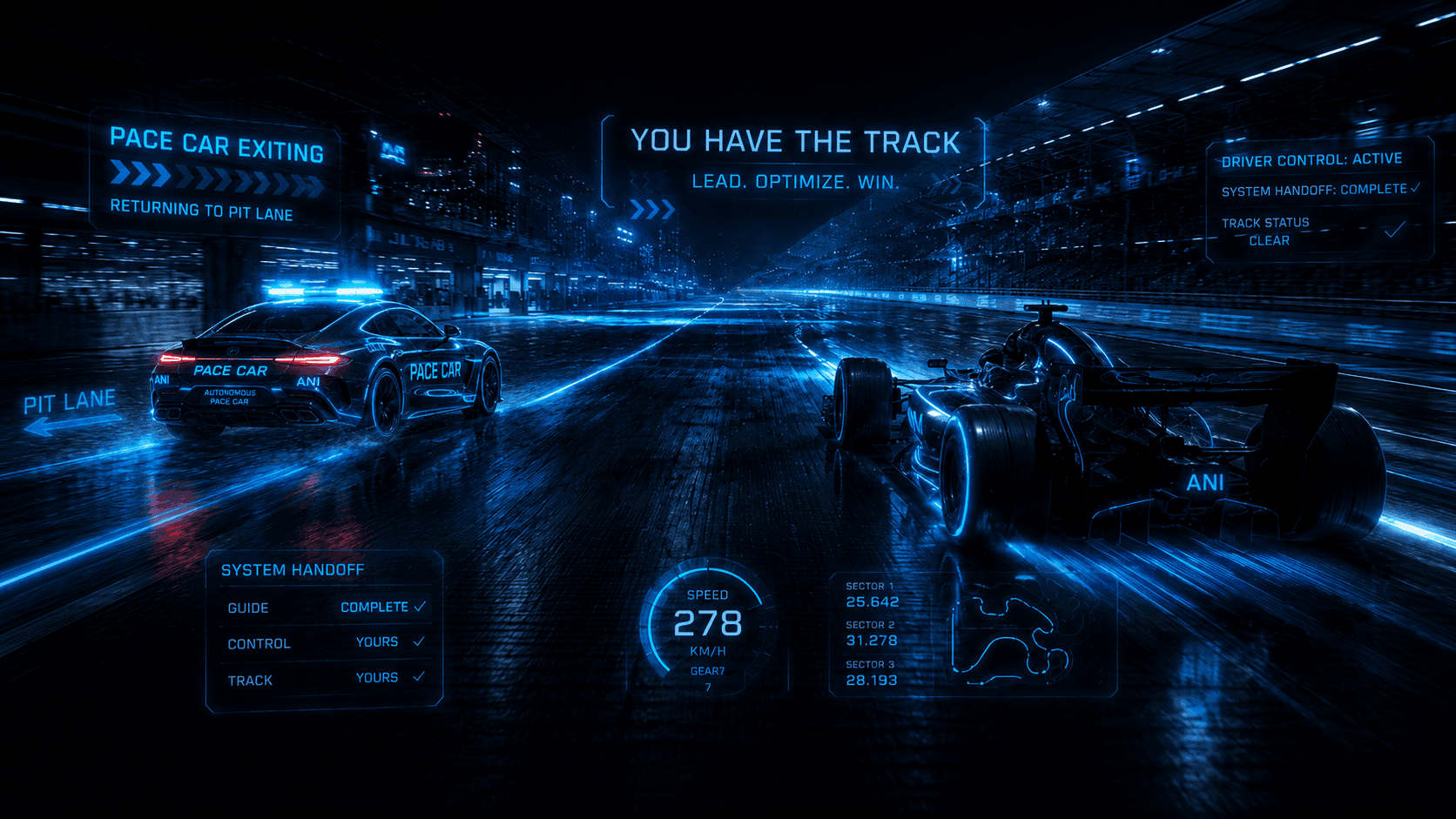
A note from me
Let me be your pace car. I show you the course, get you around the track once, and then you're off. How you see it and how you learn is what determines what you can do.
The goal is for you not to need me — but I'm here to get you back on course.
It's not how much AI you use — it's whether you think with it or instead of it.
The Moment We're In · mid-2026
A driver should know what the car can do this season. Where the technology actually sits right now — honest, not hyped.
// where we are right now · mid-2026
Where everyone is today
Six rungs, from parked to full send. This is what people actually dowith the car — and where the whole population sits in 2026. It's the slide that makes someone realize where they are, and the map of the entire opportunity.
Population shares are directional estimates anchored to 2026 adoption data (Pew, Harvard, Bain, OpenAI usage study). The shape is the point, not the decimals.
You already own the car. Signing up was the whole barrier — and you cleared it. You're just parked. Everything past here is driving, and the car can teach you most of it.
Where are you right now?
You've seen where everyone sits — now locate yourself. Fifteen seconds, and you'll know exactly what the road looks like from where you stand. Onlooker to Engineer is the whole climb, and you can do all of it without me.
Where are you right now?
A few quick questions. The course starts you exactly here — no time wasted on what you already know.
Become the Driver.
The car is a self-driving F1 car. But the thing that decides whether it's a miracle or a wreck isn't the car — it's the driver. And the driver isn't a skill set. It's a mindset.

Stands at the rail, watching others drive. Curious or skeptical, but hasn't gotten in the car yet.
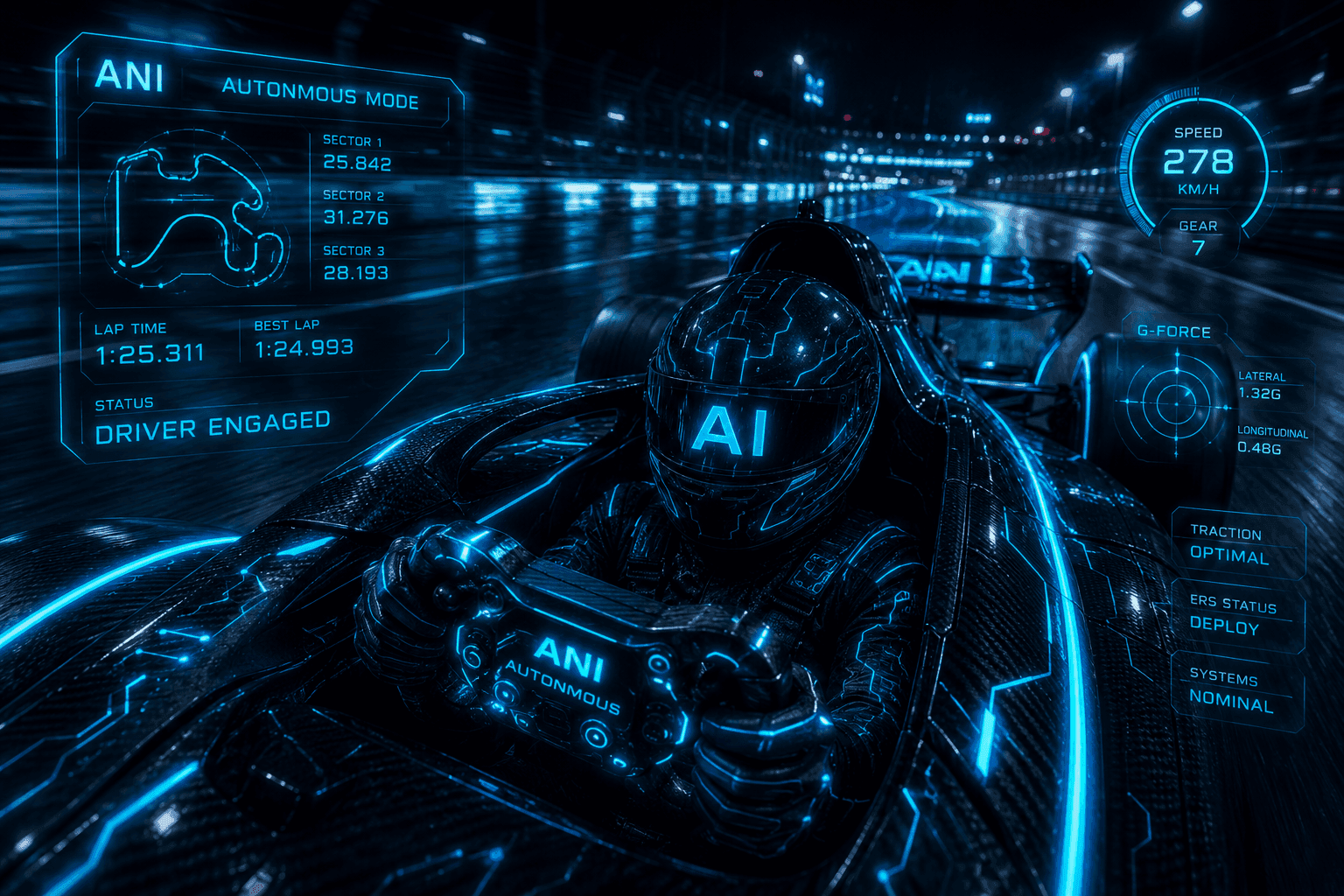
In command. Decides the destination, watches the road, knows what the car is doing — and keeps a hand near the wheel.
How you actually learn to drive it — track first, then the real world →
Learning to drive happens in two places — and most courses stop at the first one.
A closed course. Controlled, no pedestrians, nothing to hit. This is where you build skill safely — low-stakes prompts, practice, a sandbox. Anyone can learn to run the car here. But the track was never the point.
The same car, off the track — actual streets with obstacles, people, stop signs, crosswalks — running on autopilot at 200 mph.Navigating your real life, at speed, partly on its own. That's what it can do. That's also what makes it terrifying.
depending entirely on the driver who set it loose.
So the order of this course is deliberate: first you get the car and understand it, then you operate it on the track, and only then take it into the real world.Nobody does 200 on the highway on day one — but that's where we're going.
From one chat to a fleet
The road has a scaledimension. You don't just go from chats to agents — you go from one to many at every step, all the way to a team of agents that improves itself. The whole journey in six moves.
From one chat → a team that improves itself.
Build something fun
The most on-brand game we've got is the race start itself: five lights come on, and when they go out — you go. A real reaction test. See how fast you are.
Every game here was built by AI from one prompt. Enter the arcade →What you'll walk away with
Success stated as things you can do, not things you'll know. By the end, a graduate can:
Before you commit
What do I actually get for free?
The entire Foundation — every key term explained in plain language, the decision frameworks (which AI to use, when to hand off a job, passenger vs. driver), and a library of 49 ready-to-use prompts, including the exact prompts that built the arcade games. Signing up free makes you a Driver: confident, capable, directing AI well. No payment, no catch.
Do I need to pay for the AI tools separately?
For the free Driver and Operator kits, you work inside AI apps you can use on a free/cheap account — no extra cost. The Builder Kit (coming soon) will have you use your own API key, which is metered (you pay the AI provider directly for what you use — typically small amounts), and it'll teach you exactly how to set this up and keep costs low. We never mark up or resell the AI itself.
What does "permanent access" mean?
When the Builder Kit ships, it's built to be permanent account access — no subscription, no recurring fee. The kit, and everything you build from it, is yours to keep and come back to anytime, with new Builds added to the library included. The free kits stay free. That's the promise we're building toward; the Builder Kit is coming soon.
Do I need to know how to code?
No — not to start, and not for the free Driver or Operator kits (you direct AI to do whole jobs, no code at all). With the Builder Kit you go “under the hood,” but the AI does the actual coding while teaching you what each step does at every checkpoint. You learn to understand and run your own software; you don't need to become a programmer.
What's the difference between the kits?
Two are free and available now; one is coming soon. Driver (free) — direct AI in chat. Operator (free) — hand off whole jobs and supervise them, no code, inside the apps you already have. The Builder Kit (coming soon) — cross under the hood: build your own AI software, deployed on your key, all the way up to multi-agent systems that improve themselves, with every Builder Build included and an updater that keeps it all current. The free kits get you most of the way today; the Builder Kit is the next step, on the way.
Can I get a refund?
Nothing to refund yet — the free Driver and Operator kits are exactly that, free, and the paid Builder Kit is still coming soon. The entire Foundation — every term, every framework, the full prompt library, and all 12 arcade games — is free today. Experience the teaching, see exactly how it works, and you'll know the kits well before there's ever anything to pay for. The free tier is your test drive.
Is this just another AI course?
No. Most AI content shows you a flashy demo and leaves you at “now what?” This builds a real, working thing with you — and teaches you how at every step, so you can build the next one yourself. The whole point is to make you not need it. You keep what you build and the skill to build more.
What if I get stuck?
Every kit ships with a playbook (the reference you keep), a self-checking updater (keeps the kit current as tools change), and checkpoints throughout the build where the AI stops and explains what it did and why. The “when it breaks” section of each playbook covers the common snags and their fixes.
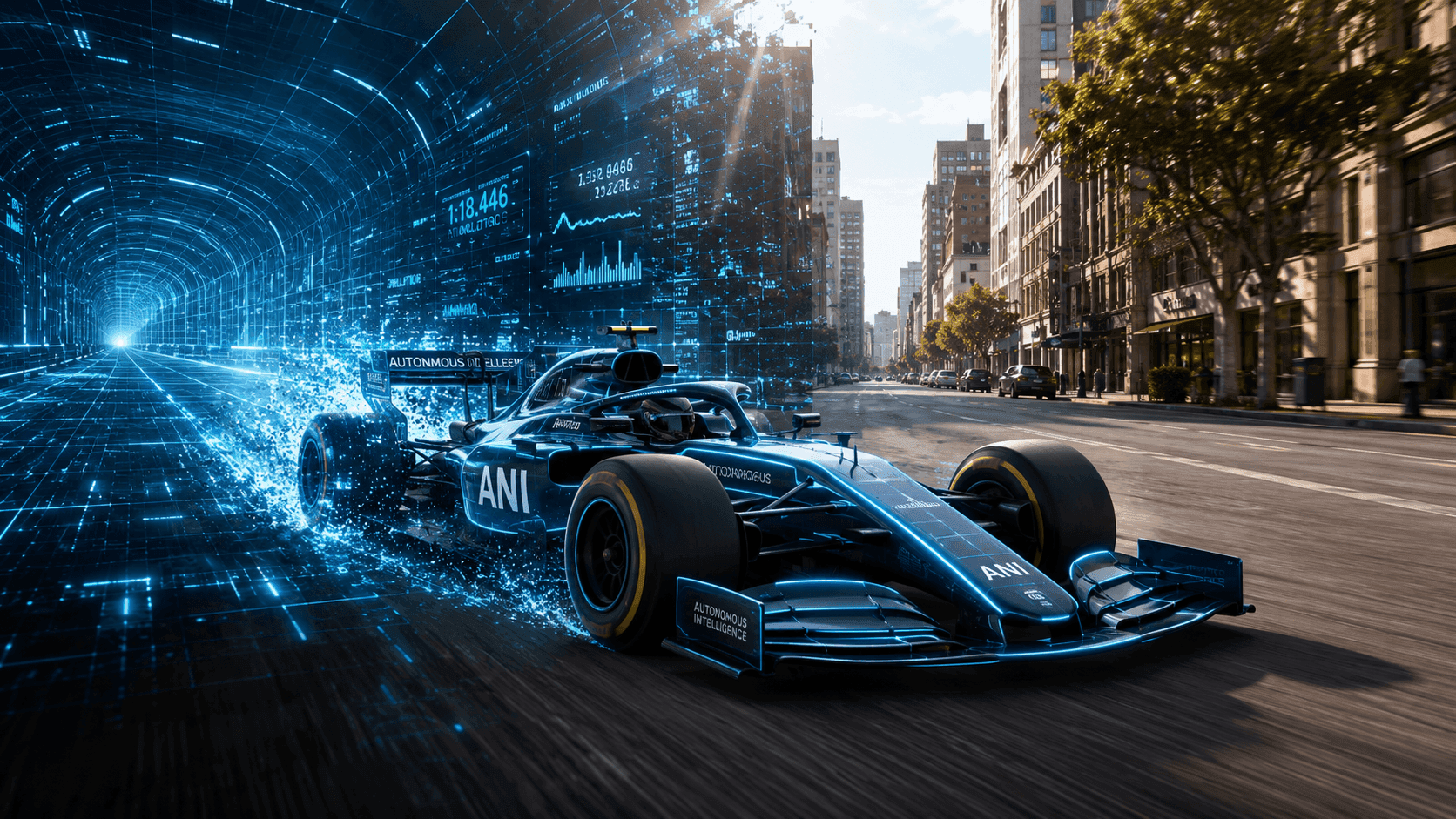
The track was never the destination. You learn it here — controlled, safe — then take it onto the open road, at speed, on your own. That's graduation: eventually, you don't need me.
Sign up free and become a Driver.
Every term explained, every framework, the full prompt library — the entire Foundation, unlocked instantly. No payment, no catch. The free tier is your test drive.